Home › Commercial Asphalt Resurfacing & Overlays
Extend the life of your pavement with commercial asphalt resurfacing in Columbia, SC. We repair critical failures, then install overlays or mill and overlay systems that renew surface ride and appearance. Precision Asphalt Columbia helps property managers and owners decide when resurfacing is the right alternative to full reconstruction.
Precision Asphalt Columbia provides professional commercial asphalt resurfacing throughout Columbia, SC, South Carolina and the surrounding area. Our licensed, insured crew delivers safe, clean, on-time work with a free estimate before anything begins. Call (803) 918-6098 or request your free quote.
Commercial Asphalt Resurfacing for Columbia Properties
Commercial asphalt resurfacing is often the most cost-effective way to restore a worn parking lot or drive lane without tearing everything out. At Precision Asphalt Columbia, we focus on resurfacing and overlays for busy commercial properties in and around Columbia, South Carolina, including retail centers, churches, office parks, medical facilities, warehouses, and multi-family communities.
Resurfacing is usually recommended when the surface layer is cracked, rutted, or faded, but the base underneath is still solid. In practical terms, if your lot has widespread alligator cracking, puddles that do not drain, or patches from multiple past repairs, you are in typical resurfacing territory. If we see structural failures like deep base movement or repeated sinking, then we talk frankly about full-depth replacement instead.
Columbia’s hot summers, afternoon thunderstorms, and occasional winter freeze-thaw cycles are tough on asphalt. That combination tends to dry out the binder, open up cracks, and let water into the base. Commercial asphalt resurfacing addresses this by removing or repairing the failed top layer, tightening up the surface, and sealing out water so the remaining structure lasts longer. The goal is not just to make the pavement black again, but to extend the life of what you already paid for.
How the Resurfacing & Overlay Process Actually Works
Precision Asphalt Columbia follows a clear step-by-step process so you know what is happening on your property and why.
1) Site evaluation and core checks: We walk the lot with you, identify recurring problem areas, and check the pavement thickness. Sometimes we pull small cores to see the depth of existing asphalt and how healthy the base is. In Columbia, many commercial lots have been overlaid multiple times. Too much thickness can create drainage and curb-height issues, so we measure instead of guessing.
2) Milling and edge preparation: On most projects we use a milling machine to grind off a controlled depth of the existing surface, usually 1 to 2 inches for overlays. We pay attention to transitions at entrances, concrete pads, drains, and ADA ramps, so that the new surface does not create a lip that trips pedestrians or scrapes bumpers. Around catch basins or low spots, we may mill deeper to reset grades so water drains instead of ponding.
3) Structural repairs and leveling: Before any new asphalt goes down, we dig out and repair localized failures. That can mean saw cutting and removing soft or alligatored sections, rebuilding the base with compacted stone, then installing full-depth asphalt patches. For ruts or birdbaths, we place a leveling course to correct the profile. Skipping this step is why some overlays fail within a couple of years; we refuse to pave over obvious problems.
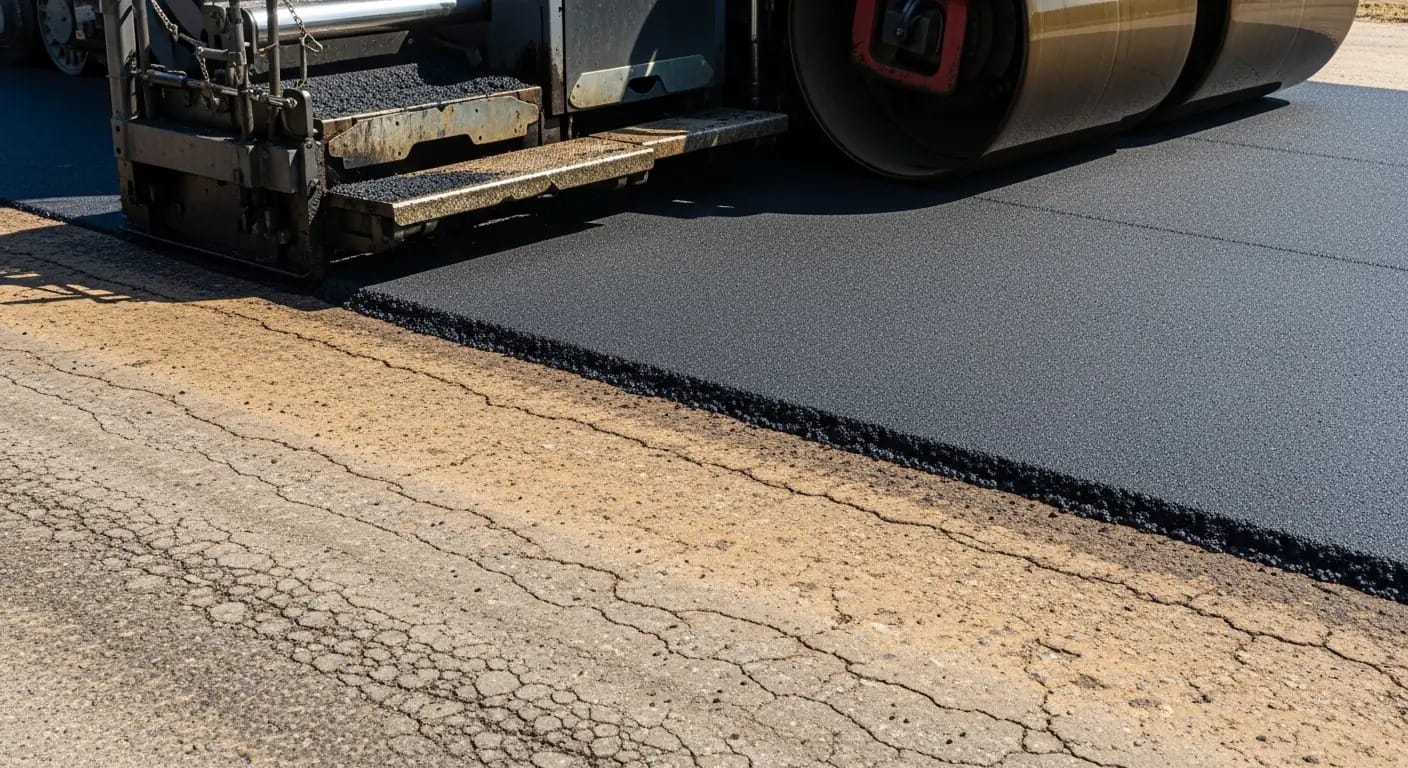
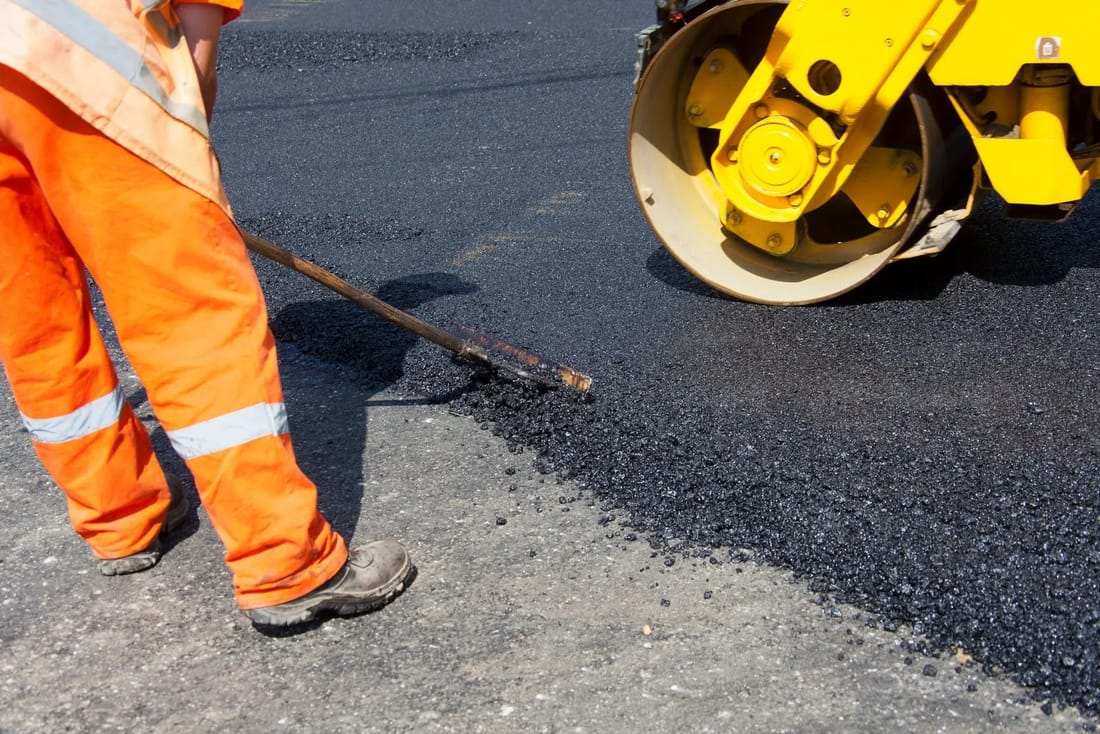
4) Installing the asphalt overlay: For commercial resurfacing we typically install a 1.5 to 2 inch compacted overlay using hot mix asphalt designed for heavy traffic. We use a self-propelled paver to place a consistent mat, then compact it with steel wheel and pneumatic rollers while the mix is still within the right temperature range. Our crews watch for segregation, roller marks, and joints so the final surface is smooth, tight, and properly tied into existing pavement.
5) Joints, edges, and cleanup: Longitudinal and transverse joints are treated as weak points, so we line them up carefully and compact them aggressively. Along edges, we create a tight, finished line and backfill with topsoil or gravel where needed so there is no exposed drop-off. We then broom sweep and haul off grindings and debris, leaving the site clean and ready for striping.
Overlay Material Options, Design Choices, and Local Timing
Most commercial asphalt resurfacing projects in Columbia use dense graded hot mix asphalt with a binder and surface course matched to traffic and budget. For loading docks and heavy truck lanes, Precision Asphalt Columbia may specify a thicker overlay or a stiffer mix with a higher stone content to resist rutting in summer heat. For lighter duty parking areas, we balance durability with cost, often using a standard surface mix over a strong existing base.
On high value or very busy properties, we sometimes recommend reinforcing fabric or a stress absorbing interlayer between the old pavement and the new overlay. These are installed after crack routing and cleaning, then bonded with tack coat and covered with hot mix. They cost more up front but can significantly slow the return of reflective cracking from the old layer below.
We also plan resurfacing around Columbia’s weather patterns. Hot, dry conditions are ideal because the asphalt compacts better and bonds to the old surface more reliably. Spring and fall are usually the sweet spots, but we perform summer projects by scheduling early morning or evening work to avoid extreme surface temperatures that can make compaction tricky and inconvenient for customers. In winter, we watch temperatures closely and will not lay an overlay if the base or air temperature is too low for a proper bond.
Drainage design is another local priority. Columbia’s sudden thunderstorms can drop a lot of water fast. When we resurface, we look at existing flow paths, low spots, and clogged or sunken drains. We may adjust slopes slightly with leveling courses so water sheds more efficiently, and we coordinate with you if any drainage structures need reset or replaced before the new overlay goes on.
Color and appearance are part of the design too. While standard asphalt is dark black when new, it quickly weathers to dark gray. If you want a longer lasting rich color and improved UV protection, we can schedule sealcoating after the new overlay has cured for an appropriate period. We also plan layout for parking stalls, truck lanes, and fire lanes so that once the overlay is complete, striping clearly supports safe and efficient traffic flow on your property.
What Drives the Cost of Commercial Asphalt Resurfacing
Many property managers only see a square foot price, but real resurfacing costs are driven by several specific factors. Precision Asphalt Columbia walks through these with you so your budget matches actual site conditions.
Existing thickness and number of prior overlays: If your lot has already been overlaid one or more times, we may need extra milling to keep the new surface from coming above gutters, curbs, or thresholds. Extra milling adds machine time and trucking for grindings, but it prevents long term drainage and ADA compliance problems.
Amount of base repair required: Two similar sized lots can have very different budgets if one has deep base failures. Each full-depth repair area involves saw cutting, excavation, stone, compaction, and multiple asphalt lifts. We quantify these spots during the inspection instead of leaving them as vague “time and material” surprises whenever possible.
Traffic type and mix design: A shopping center with steady car traffic can use a more economical surface mix than a distribution center with constant 18 wheelers. Heavier traffic may require thicker overlays and upgraded mixes. We spell that out so you understand what you are paying for and why it matters.
Access, phasing, and hours: Working around open businesses, hospitals, or apartment complexes often means night work or tight phasing to keep entrances open. That can increase labor and traffic control costs. We design staging plans that limit disruption while still hitting compaction and quality targets.
Details such as striping, ADA upgrades, and drainage fixes: Resurfacing is the ideal time to correct faded layouts, noncompliant slopes at handicap spaces, and chronic ponding. Those add scope, but also reduce your risk and customer complaints down the road. We can price these as separate line items so you can prioritize based on your budget.
Choosing Precision Asphalt Columbia and What to Expect
Before you authorize a commercial asphalt resurfacing project in Columbia, it is worth knowing what a professional contractor should provide. Precision Asphalt Columbia starts with a site visit that includes measurement, photos, and a written scope describing milling depth, overlay thickness, repair quantities, and any drainage or ADA items we see. You should be wary of quotes that only mention “overlay parking lot” with no detail, because that makes it hard to compare options or hold anyone accountable for results.
Communication and scheduling are central. Commercial resurfacing involves temporary closures, lane shifts, and access changes. We work with property managers to create a phasing map, coordinate with tenants, and schedule work at off peak times when possible. For multi-entrance sites, we keep at least one access open at all times so customers and deliveries can still reach you. You will know in advance when milling, paving, and striping will happen, and what areas are impacted each day.
On paving days, our crew handles barricades, cones, and flaggers as needed, but we also rely on your help communicating with tenants and staff so cars are moved on time. A clean, clear jobsite allows us to place a better overlay and finish faster. After paving, we typically recommend keeping traffic off new asphalt for 24 hours for typical car use and longer for heavy equipment, depending on temperature and mix.
Quality does not end when the rollers leave. We walk the job with you once the overlay has cooled to check joints, drainage, and overall finish. Any punch list items are documented and addressed. We can also set up a maintenance plan, including crack sealing and periodic sealcoating, to protect your investment and delay the next major resurfacing cycle.
In short, commercial asphalt resurfacing is a chance to reset the clock on your pavement without paying for a full rebuild. With solid evaluation, careful preparation, and the right mix design for Columbia’s climate and your traffic, Precision Asphalt Columbia can restore function, improve appearance, and extend the life of your lot in a way that fits both your operations and your budget.