Home › Asphalt Resurfacing & Overlays
Revive a worn driveway or small private lot with asphalt resurfacing in Columbia, SC. Our team evaluates the existing surface, repairs structural issues, and installs a smooth, durable overlay. Precision Asphalt Columbia helps you avoid the cost of full replacement when a quality asphalt overlay will give you years of extra use and a fresh blacktop look.
Precision Asphalt Columbia provides professional asphalt resurfacing throughout Columbia, SC, South Carolina and the surrounding area. Our licensed, insured crew delivers safe, clean, on-time work with a free estimate before anything begins. Call (803) 918-6098 or request your free quote.
Asphalt Resurfacing & Overlays in Columbia, SC
If your driveway, parking lot, or private road is starting to crack and ravel but the base still feels solid, asphalt resurfacing can give you a like-new surface without paying for a full tear out and replacement. At Precision Asphalt Columbia, we focus on overlay work that fits Columbia, SC pavement, traffic, and weather, not a one-size-fits-all approach.
Resurfacing (also called an asphalt overlay) means we keep the existing base and most of the existing asphalt, then repair and level it, and install a new asphalt layer on top. This usually makes sense when the pavement is 10 to 20 years old, has scattered cracks and minor dips, but is not crumbling or sinking across large areas.
Around the Midlands, the clay soils, summer heat, and sudden thunderstorms are hard on asphalt. We see a lot of oxidation, brittle surfaces, and shallow potholes where water sits. Resurfacing addresses those issues by sealing in the old asphalt, improving drainage, and giving you a fresh wearing surface that can typically extend pavement life another 8 to 15 years when it is maintained properly.
How Asphalt Resurfacing Actually Works
Before we ever bring in a paver, we evaluate the existing pavement. A Precision Asphalt Columbia estimator will walk the entire area, probe soft spots, check drainage patterns after rain when possible, and look for base failures like alligator cracking and sunken areas near catch basins or edges. If the base is failing over large areas, we will be honest and recommend partial or full reconstruction instead of resurfacing.
When resurfacing is appropriate, we start with prep. This usually includes: (1) Cleaning the surface by sweeping or using a power broom to remove sand, dirt, loose stone, and vegetation. Oil spots are scraped and treated so the new asphalt can bond. (2) Milling or grinding transitions at tie-in points like garage floors, city streets, sidewalk crossings, and drainage grates. This prevents an awkward bump where new asphalt meets existing surfaces. In many Columbia neighborhoods, we lightly mill at the road connection so your driveway does not sit higher than the gutter line. (3) Full-depth repairs in bad sections. We saw cut around severe alligator cracking, deep potholes, or settled areas, remove the failed asphalt, and replace it with new hot mix compacted in lifts.
Once repairs are made, we address level and drainage. Low spots that hold water are leveled with a leveling course of asphalt or a fine aggregate mix so water runs toward drains, swales, or the street. In Columbia, this is crucial because heavy afternoon storms will quickly find any low spots and create standing water that shortens pavement life.
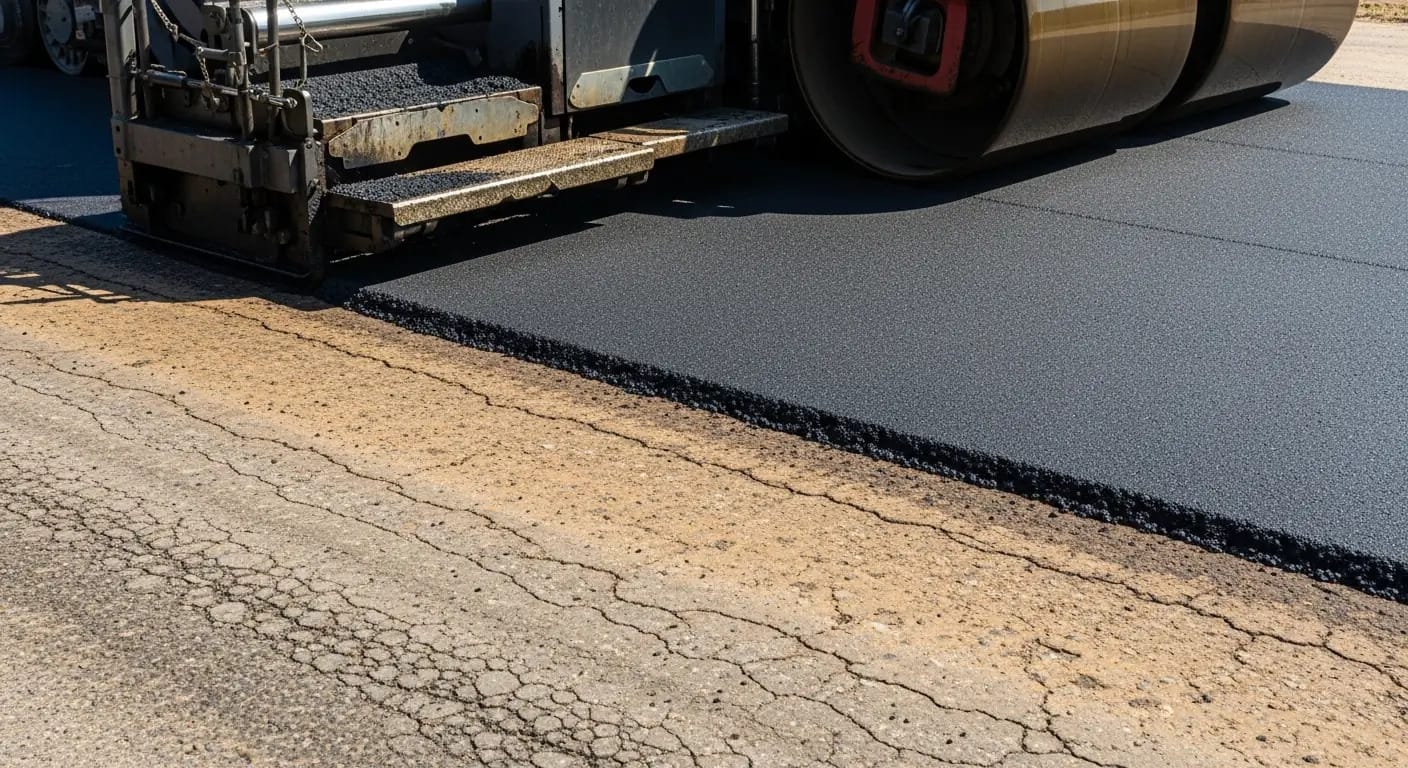
Next, we apply a tack coat, a thin spray of asphalt emulsion that helps the new overlay bond tightly to the old surface. Then the hot mix asphalt, typically 1 to 2 inches thick depending on use and existing grades, is laid with a paver. Our crew immediately compacts it with steel and pneumatic rollers to lock in density and smoothness. On parking lots and HOA roads we work in sections to keep limited access open and to meet any city or county access requirements.
Finally, we stripe and mark the surface once the asphalt has cooled adequately. For commercial properties in Columbia, this includes ADA parking layouts, fire lanes, arrows, and any custom markings your site plan requires.
Overlay Options, Materials, and Local Timing
Not every overlay mix is the same, and the best option depends on how the pavement is used. Precision Asphalt Columbia typically recommends a dense graded hot mix for driveways and most light duty parking areas. It gives a smooth, dark finish and good durability for everyday cars and light trucks.
For high traffic commercial parking lots, delivery lanes, or areas that see turning heavy trucks, we often use a slightly thicker surface course with more angular stone to resist rutting and shoving. Around warehouse docks and dumpster pads, it may make more sense to rebuild those specific areas with heavier duty asphalt or concrete while resurfacing the surrounding pavement with a standard overlay. That targeted approach often saves money while still addressing your heaviest wear points.
We also look at your long term maintenance plan. If you expect to sealcoat every few years, a standard overlay is usually fine. If maintenance is likely to be less frequent, we may recommend a higher quality surface mix or slightly increased thickness to better resist Columbia's sun and heat.
Timing matters for asphalt resurfacing in South Carolina. The best months in the Columbia area are typically March through early June and late September through November, when daytime temperatures are moderate and afternoon thunderstorms are less predictable but generally shorter. We can resurface in summer, and often do, but we plan start times earlier in the day to avoid the strongest heat, which can affect workability and compaction if not managed carefully.
Cold snaps in winter can make overlays risky if temperatures drop too low for proper bonding and compaction. If you are targeting a specific completion window, especially for a school, church, or shopping center, it helps to call us a few weeks ahead so we can schedule your resurfacing during a stable weather period.
What Drives the Cost of Asphalt Resurfacing
Several specific factors control the price of an asphalt overlay in Columbia, and it helps to understand them before you compare quotes.
1. Total square footage and layout. Larger, open areas are more cost efficient per square foot because the paver and rollers can work continuously. Small, broken up areas with islands, tight turns, or lots of handwork around curbs take more labor hours and usually raise the unit price.
2. Amount of repair and prep work. If your lot just needs minor patching and a light mill at entrances, resurfacing will be on the lower end of the cost range. If we have to saw cut and remove multiple large failed sections, adjust drainage structures, or rebuild edges that have crumbled where vehicles drop off the pavement, that adds material, trucking, and labor.
3. Overlay thickness. A typical residential driveway overlay in Columbia is around 1.5 inches compacted thickness. Commercial lots often run 1.5 to 2 inches. Thicker overlays use more asphalt mix, which is priced by the ton. We will explain what thickness is appropriate for your traffic so you do not pay for unneeded thickness, but also are not left with a layer too thin to perform.
4. Access and phasing. If we can close the entire area at once, work is faster and costs less. If your business requires phasing, night work, or weekend work to keep operations open, pricing will reflect the extra mobilization and crew time, but you will get a plan that keeps customers and employees safe and able to reach your doors.
5. Striping and extras. Re-striping, adding speed bumps, installing wheel stops, or reconfiguring traffic flow all affect the final number. In the City of Columbia and Richland County, you may also have specific ADA or fire lane requirements. We factor those into the proposal so there are no surprises during inspections.
A precise, written proposal from Precision Asphalt Columbia will break these items out in plain language. That way you understand exactly what is included, what might affect the price, and where you might have options to adjust scope to fit your budget.
Common Overlay Problems and How We Prevent Them
If resurfacing is done incorrectly, problems often show up within the first few seasons. Our focus at Precision Asphalt Columbia is to prevent those issues before they start.
Reflective cracking is a common concern. Cracks in the old pavement can work their way up through the new overlay. To reduce this, we clean and fill significant cracks before paving, replace severely cracked sections entirely, and use proper tack coat coverage so the layers move together instead of separately. While no overlay can guarantee zero reflective cracking, good prep and repair greatly slows it down.
Ponding water is another big one in our area. If an overlay simply follows existing low spots, standing water will remain, and may worsen if the new thickness changes how water flows. During layout, we check slopes with a level or laser and adjust with leveling courses so water moves toward drains, flares, or street gutters. After paving, we visually check the surface and, when possible, return after a rain to confirm that water is draining as planned on larger projects.
Edge failures are common along residential driveways and lightly built parking lot edges. When vehicles routinely drive off the edge or park partly off the asphalt, the unsupported edge can crack and break away. We can widen the paved area slightly, rebuild the edge and compact the shoulder, or recommend concrete banding at high stress points like dumpster areas and tight corners.
For you as a property owner, the key steps after resurfacing are straightforward. Keep traffic off the new asphalt for the period we recommend, which is usually 24 to 48 hours for light duty use and a bit longer for heavy trucks or in cooler weather. Avoid sharp turns or jackknife maneuvers by heavy vehicles in the first week. Plan to sealcoat within the first 2 to 3 years, then every few years as needed. In Columbia's climate, that routine care can significantly extend the life of your new overlay.
If you are unsure whether your pavement is a candidate for asphalt resurfacing, we are happy to walk it with you, talk through options, and give you a clear, local recommendation, not just a generic answer.